
What you'll learn?
Description
Want to showcase your data analysis skills to recruiters or clients? In this video, I’ll show you exactly how to document your data analysis report on GitHub—from creating a professional repository to writing a clear and structured README file. 🔹 What you’ll learn in this video: Why documenting your project is important How to structure your GitHub repository Tips for writing a professional README file How to make your portfolio stand out to recruiters 📌 This tutorial is perfect for aspiring data analysts, data scientists, or anyone building a GitHub portfolio. If you find this helpful, don’t forget to like, share, and subscribe for more data analysis tips and tutorials.
Powered by Froala Editor
Course content
Students also bought
No Course Found
About the instructor

- 4.6 Instructor Rating
- 45,786 Students
- 2,533 Reviews
- 24 Courses
- View all Courses
Student feedback
Reviews
Add a Review
₦0 ₦0 24% off
4 days left at this price!
30-Day Money-Back Guarantee
This course includes
- 2.5 hours on-demand video
- 34 articles
- 12 downloadable resources
- 51 coding exercises
- Full lifetime access
- Access on mobile and TV
- Certificate of Completion
Course Features
- Duration 00:17:28 hours
- Lectures 1
- Resources 1
- Language English
- Skill level
beginer - Students
- Certificate No
Related Courses
More Courses by Bunmi Emmanuel
Become a Teacher, Share your knowledge
Create an online video course, reach students across the globe, and earn money
- +2348103676330
- abiodunitobi@minazconsult.org
- Book Publication, Computer Networking & Software Dev.
We are on
Download App
Download our mobile app and learn on the go.


© 2026 MINAZ-ABI ICT consult ltd. All Rights Reserved. by Datapro Int.
Network +
Bestseller
Updated February 2026
- 23 total hours
- beginer
Introduction to Computer Networking
- to be network engineer
Data Analysis
Featured
Updated February 2026
- 23 total hours
- beginer
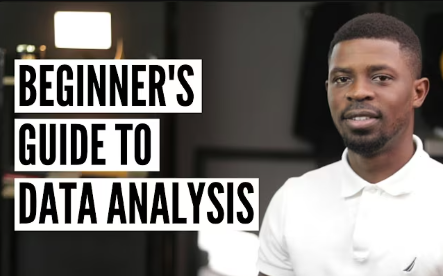
How to Document Your Data Analysis Report on GitHub (Step-by-Step) | Data Analysis Portfolio
DataAI
HighestRated
Updated April 2026
- 23 total hours
- beginer
CompTIA DataAI (formerly DataX)
- Statistical methods: applying t-tests, chi-squared tests, analysis of variance (ANOVA), hypothesis testing, regression metrics, gini index, entropy, p-value, receiver operating characteristic/area under the curve (ROC/AUC), akaike information criterion/bayesian information criterion (AIC/BIC), and confusion matrix. Probability and modeling: explaining distributions, skewness, kurtosis, heteroskedasticity, probability density function (PDF), probability mass function (PMF), cumulative distribution function (CDF), missingness, oversampling, and stratification. Linear algebra and calculus: understanding rank, eigenvalues, matrix operations, distance metrics, partial derivatives, chain rule, and logarithms. Temporal models: comparing time series, survival analysis, and causal inference.